
A while ago, the New York Times wrote an article about how languishing is the descriptive phrase for our collective experience right now – where all the emotions that we are feeling right now, are about loss and processing.
It was supposed to feel like a light bulb being turned on. Because last year, when the Harvard Business Review said that what we were going through was grief, it did feel like that – that the shock, denial, lack of understanding and trying to keep up with what was going on, understanding that a pandemic was happening – all of that did feel like grief.
This year, languishing connotes that collective experience. Languishing seemingly suggests that we’ve come to terms with what’s happened and we’re processing it. This is true for the West, where vaccines have been rolled out, COVID-19 cases are reducing, and everything is opening up again.
That couldn’t be farther from the experiences of the people I work with, or my own.
In India, we’ve barely had time to process one thing before we have been hit with the next. Sure enough, we adjusted to COVID-19 on a functional level. However, we are far from thriving in it, and much closer to struggling for survival again. One year into the pandemic, we’re going through the second wave, and this is hitting us harder than the last one. It’s demanding more from us. Our attention. Our support. People are crowdfunding and engaging in collective action, which is exhausting, and inspiring and hopeful and encouraging and inspirational. Revolutionary, even.
To club all of that under the umbrella term of ‘Languishing’ feels inadequate for these varied experiences and emotions. Or even to say ‘Dormant’, when a glance at social media will show you the frenzy of action that’s ongoing. Both terms are valid for the collective experiences of the societies that they were written by. However, the current lived experience in India is starkly different from these.
There’s so much against us and yet we are going on. We know what is expected of us, be it working from home, or looking for a new job, or funding to make ends meet.
Usually, at this point, I would present you with an alternative and say maybe this is what describes our experience instead. Yet, currently, I am also at a loss of words, because can there really be one word to describe what we are going through, especially when it’s not over yet? We can probably look back, maybe a few months from now, maybe when the worst is over, (if this is the worst) and say, ‘Hmmm, during that period, THIS best described the collective feeling’.
But right now, words feel fall short of it.
The collective is so much stronger than the individual and this has been one of the strongest reminders of it.
It’s really unfortunate that it’s happening this way.
Earlier, therapy sessions would start with a ‘How have you been?’ on both ends and then we would get to the concerns at hand. Now, that question bears little meaning. Responses range from: ‘I’ve been busy’ (a functional response), to ‘Meh’ (an accurate response to feeling overwhelmed), to ‘I’m hanging in there’ (with the pleading undertone of ‘How much longer do I have to?’). The most resonant response, however, is: ‘I don’t know.’
I’ve been feeling a sense of disconnect from my emotions. It feels like there’s a fog of nostalgia and defiant denial of the present that is covering my emotions, rendering them inaccessible. Our emotions lurk underneath, demanding our attention, demanding to be felt. Even feeling a bit of it, such as just the tip of the Iceberg of Emotions, feels scary, because how on earth will we deal with the iceberg itself?
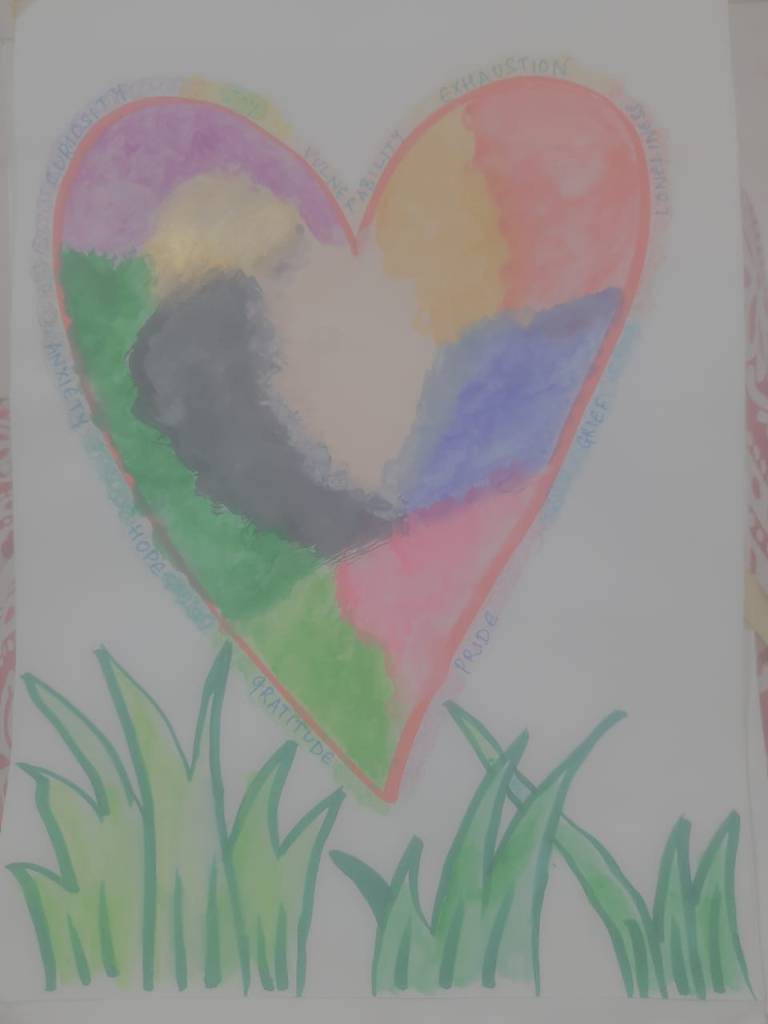
It isn’t easy for us to process our emotions and also keep going.
When we move towards peeling off the layer of ‘I don’t know’ to take a peek at what’s underneath, we are met with significant resistance. Do we really want to find out how we feel? It is underlined with the fear that: ‘If I pause and actually look at how I’m feeling, I’ll break.’
And that makes sense.

We don’t know when that break is coming.
We don’t know how long we can keep going because there is not a very clear end in sight.
It’s like holding in a breath. And we start to release it, but something happened and we got startled. And we had to stop and hold it again. This feels worse because we had just started to release it. We had just started to feel okay about it. Now, we feel stuck and maybe that’s where we are.
And maybe it’s okay to not define the stuck-ness right now. And to stay and get through this, or describe it for ourselves on a day-to-day basis rather than having a lasting definition, until we find something. Maybe the real question isn’t: How do we deal with the iceberg of emotions? Because we don’t have to, yet. Let’s just deal with the tip that’s accessible. The rest can happen as it does, slowly, in time. Maybe right now, we need more qualitative language. Maybe there is no rush to name our collective experiences or try to fit them under a currently inadequate umbrella term. Maybe we really, really, really need to expand our vocabulary and shift our lifestyles and keep finding ways to make the going a little bit easier, however we can cope, because nothing prepared us for a pandemic.
And yet, here we are.
Getting through one.
Although the actors are exhausted, the show keeps going on.

